Hi everyone. School's out for me right now, so I might be able to do a little more with this blog than book reviews. In the meantime I do have a new book to review, and it comes from Brian Jacques wonderful world surrounding the amazing abbey of Redwall. This book is The Long Patrol.
Rating: 5 out of 5 stars
Story:
Tamello De Fformelo Tussock is a young hare who dreams of joining the Long Patrol, a group of hares that serves Lady Cregga Rose Eyes, the badger who rules the stronghold of Salamandastron. Even though both of Tammo's parents have served in the Long Patrol it takes Tammo's mother to convince an old friend, a squirrel named Russa, to get Tammo started on his journey. However the journey isn't a smooth one. An army of sea vermin known as the Rapscallions has come ashore following their defeat at the hands, or paws, of Lady Cregga Rose Eyes, and their former leader has died. His heir, through treachery and deceit, is Damug Warfang, a rat who is eager to carve a name for himself. Leading his army inwards, he learns that the peaceful Redwall Abbey has a problem. The south wall is crumbling, and needs to be rebuilt. The race is on as Damug makes his way towards the peaceful abbey. Will Tammo and the Long Patrol be able to help save Redwall? Or will the abbey fall into the clutches of the Rapscallions?
Brian Jacques always does an incredible job with storytelling and world building. I like how he manages to replace the traditional fantasy races with woodland creatures like mice, squirrels, moles, badgers, etc. He also knows how to make use of poem, rhyme, and song to help further build up the world around Redwall. The book may start out slow for some, but it gets easier to read the further you go along. It may be hard to understand the style of speech several animals have, but that helps add to the world of Redwall. If you want to take a break from elves, dwarves, and other traditional fantasy races then you should take a trip to Redwall Abbey.
Caution:
Characters are in peril and threatened with death. An eel almost eats someone. Some characters end up trapped in a dark place and encounter blind cannibals. Damug Warfang's helmet has a skull on it. A badger is mentioned as having Bloodwrath. Animals fight and kill each other
Lessons:
Fighting is justified if you are trying to protect your family and loved ones from those who would harm them and take away their freedom. The greatest act of love is to give your life from another. We can find ourselves prepared for the future if we study the past.
Oh, just a little note, this week I'm going to be reading and reviewing a book for a friend before it becomes available online. I intend to read and review it before the week is out, so be sure to check back again this week.
Showing posts with label animals. Show all posts
Tuesday, April 21, 2015
Thursday, April 9, 2015
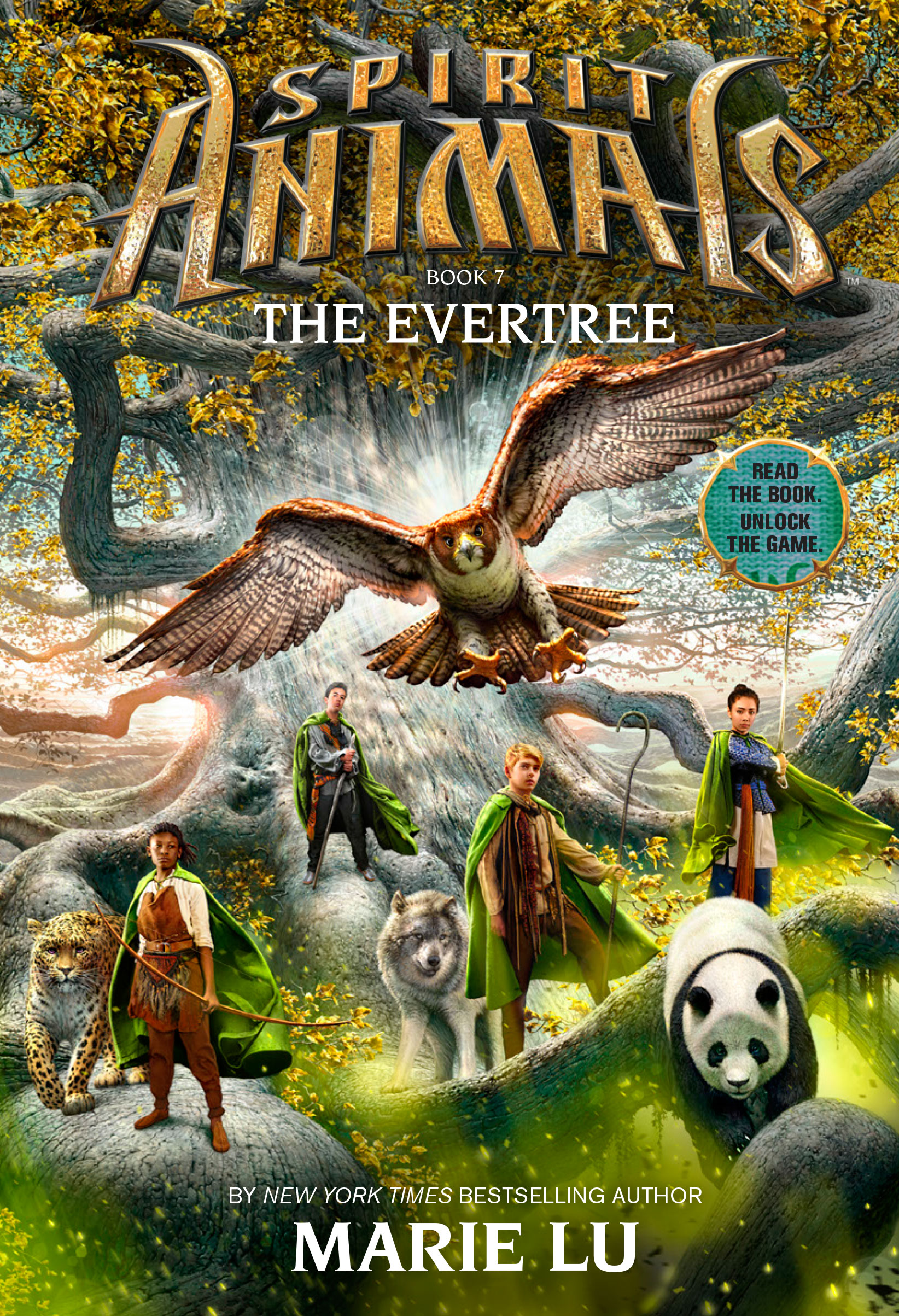
Book Review: Spirit Animals: Evertree is awesome
Hi everyone. I've got a lot of stuff I need to do, but I think it's time I gave you another book review. Hopefully this summer I'll be able to branch out a little.
Rating: 4 out of 5 stars
Story:
The Greencloaks are in trouble. The Conquerors have gotten their hands on all but three of the talismans, and only two are in their possession. The last talisman is the Platinum Elk, which belongs to Tellun the elk, the greatest and most powerful of all the Great Beasts. However with Kovo the ape about to break free of his prison there's no time to go and seek the aid of Tellun. Conor, Abeke, Rollan, and the Greencloaks will have to travel to the Conqueror's homeland of Stetriol to try and stop Gerathon and Kovo. However terrible things are happening across Erdas. Continents are changing, the weather's going berserk, and the animals are getting sick. Is there a way to reverse this chaos? Or will Erdas be plunged into an era of darkness?
I liked so much in the book. I liked how the actions of the Conquerors and Kovo and Gerathon are literally tearing Erdas apart. It really shows how serious the situation is. When Tellun made an appearance it's easy to see why he's the greatest of all the Great Beasts. I won't say what, but he does some pretty awesome stuff. Definitely not your average elk. I also liked how more Erdas mythology and history is brought into this book. However due to the fast pace of the book I was left feeling like they could've done more. While the battles were epic in their own right I was just left wanting a bit more. I'm not talking graphic or gory kind of violence. When I think about it I can see the point was to try and get through, not to fight bad guys except when absolutely necessary.
Caution:
A snake keeps taking control of people. Animals fight each other. The chaos the world is being thrown into might be intense for some.
Lessons:
The greatest act of love is to give our life for another. When the lives of our loved ones and our freedoms are threatened it's okay to fight to protect them. This is for people who are of a Christian background: The Atonement of Jesus Christ has the power to free us from the power of the Devil.
Rating: 4 out of 5 stars
Story:
The Greencloaks are in trouble. The Conquerors have gotten their hands on all but three of the talismans, and only two are in their possession. The last talisman is the Platinum Elk, which belongs to Tellun the elk, the greatest and most powerful of all the Great Beasts. However with Kovo the ape about to break free of his prison there's no time to go and seek the aid of Tellun. Conor, Abeke, Rollan, and the Greencloaks will have to travel to the Conqueror's homeland of Stetriol to try and stop Gerathon and Kovo. However terrible things are happening across Erdas. Continents are changing, the weather's going berserk, and the animals are getting sick. Is there a way to reverse this chaos? Or will Erdas be plunged into an era of darkness?
I liked so much in the book. I liked how the actions of the Conquerors and Kovo and Gerathon are literally tearing Erdas apart. It really shows how serious the situation is. When Tellun made an appearance it's easy to see why he's the greatest of all the Great Beasts. I won't say what, but he does some pretty awesome stuff. Definitely not your average elk. I also liked how more Erdas mythology and history is brought into this book. However due to the fast pace of the book I was left feeling like they could've done more. While the battles were epic in their own right I was just left wanting a bit more. I'm not talking graphic or gory kind of violence. When I think about it I can see the point was to try and get through, not to fight bad guys except when absolutely necessary.
Caution:
A snake keeps taking control of people. Animals fight each other. The chaos the world is being thrown into might be intense for some.
Lessons:
The greatest act of love is to give our life for another. When the lives of our loved ones and our freedoms are threatened it's okay to fight to protect them. This is for people who are of a Christian background: The Atonement of Jesus Christ has the power to free us from the power of the Devil.
Friday, August 16, 2013
Creatures for Book 2
Hi everyone. One of the mistakes I made with my first book was the use of too many different species. That was something I was hoping to correct with the second installment in the Myths of Dymos series. However there was something I wanted help with: I want to know which creatures you would like to see in this next adventure. This is just a list of what I was considering thus far. I'd greatly appreciate your feedback and suggestions on what you would like to see Josun and his friends encounter in the land of Bylouth. If you know of something that isn't on the list that you would like to see in book two please let me know. Just post your suggestions in the comments section below, or if you do not have an account connected to Blogger please feel free to comment on Facebook. Now on to the list:
Mythical
Centaur
Minotaur
Giant
Dwarf
Elf
Dragon
Griffin
Hippogriff
Pegasus
Meriod
Roomar Vulshur
Alieron
Goblin
Troll
Ogre
Werewolf
Satyr
Harpy
Basilisk
Cockatrice
Cerberus
Othrus
Oberus (possible new creature or name for new character. Haven't decided yet.)
Fairy
Pixie
Sprite
Dryad
Naiad
Oread
Quinotaur
Tarasque
Peluda
Unicorn
Boar based off of the boars from Greek Mythology
Deer based off of the Ceryneian Hind
8-legged horse
Gnome
Salamander
Mermaid/Merman
Sea Serpent
Kraken
Selkie
Ichthyocentaur
Hippocampus
Magic users (wizards, witches, etc)
Melusine
Cyclopes
Gorgons
Gargoyles
Lindworm
Drake
Wyvern
Prehistoric
Torvosaurus
Megalosaurus
Baryonyx
Dacentrurus
Hypsilophodon
Aristosuchus
Parasol Ant (what the book Walking with Beasts called the ants from the first part of the documentary)
Godinertia
Leptictidium
Gastornis/Diatrama
Ambulocetus
Cetiosaurus
Hypseleosaurus
Ampelosaurus
Lilliensternus
Pyroraptor
Iguanodon
Pelicanimimus
Camtosaurus
Plateosaurus
Ornithoceirus
Anurognathus
Peteinosaurus
Ramphorynchus
Archaeopteryx
Neovenator
Compsognathus
Elasmotherium
Auroch
Lexovisaurus
Mammoth
Megaloceros
Propaleotherium
Meganuera
Arthropluera
Edaphrosaurus
Dimetrodon
Seymouria
Cephalaspis
Brontoscorpio
Pterygotus
Cameroceras
Pulmonoscorpius
Woolly Rhino
Eurotamandua
Woolly Mammoth
Hyaenadon
Entelodon
Calicotherium
Crassigyrinus
Cave Bear
Cave Hyena
Homotherium
Friday, January 28, 2011
Creature Research
Okay, now it's time for me to blog again. I was reading this article the other day on how to make your blog better, and one of the suggestions they had was to do pillar articles. That's basically when you explain how to do something in a series of short steps (usually five). This is going to be the first blog where I do that, and the topic will be on researching critters for books.
1. Know the land. Having a new land with exotic creatures is good and all, but what is the land like? What's the geography and weather, the climate and ecology like? It's no good having an animal in a land if you don't know what the land is like. You can't expect a polar bear to be happy in the Sahara, and a camel won't survive in the Arctic. You must have an idea of what kind of ecosystem the animal is used to before you write it in, whether it be prehistoric, modern, or legendary.
2. Make a list. When coming up with a new place for a story, it helps me to know what kind of bestiary the land has in my imagination. When I write down what I'd like to see there, it helps me to know what I need to research and leave the others to the side. This brings us to our third step.
3. Do research. Writing about animals is good and all, but how much do you really know about them? It helps to read about the animals you'd like to write into your story so you know how to make them seem realistically. Suppose you want to write about Triceratops. You can't make it out to be a bloodthirsty monster living in the desert, because no one would believe that. You need to find out what it's home was like sixty-five million years ago, what it probably ate, what it's social behavior was probably like, etc. With creatures that never existed, you should read what you can about them, and try to make them seem believable for your story.
4. Decide what's going into the story. Now that you've done your research, you can decide which critter you really want in your story. Just make sure it'll help with the plot in some way. For example, in my book it was due to the appearance of a Great Lizard (known as Megalosaurus in our world) that caused Josun to head out on his adventures. Once you're sure of what's going to go into the story, you're ready for the final step.
5. Write. Now you can actually do your story. Be sure your critters are as believable as possible, and then put your story down on paper.
This doesn't just apply to animals. It's important to do research on humans if you're creating a world based off ancient societies. If you don't know how things were done in ancient times, you risk doing a bad story.
1. Know the land. Having a new land with exotic creatures is good and all, but what is the land like? What's the geography and weather, the climate and ecology like? It's no good having an animal in a land if you don't know what the land is like. You can't expect a polar bear to be happy in the Sahara, and a camel won't survive in the Arctic. You must have an idea of what kind of ecosystem the animal is used to before you write it in, whether it be prehistoric, modern, or legendary.
2. Make a list. When coming up with a new place for a story, it helps me to know what kind of bestiary the land has in my imagination. When I write down what I'd like to see there, it helps me to know what I need to research and leave the others to the side. This brings us to our third step.
3. Do research. Writing about animals is good and all, but how much do you really know about them? It helps to read about the animals you'd like to write into your story so you know how to make them seem realistically. Suppose you want to write about Triceratops. You can't make it out to be a bloodthirsty monster living in the desert, because no one would believe that. You need to find out what it's home was like sixty-five million years ago, what it probably ate, what it's social behavior was probably like, etc. With creatures that never existed, you should read what you can about them, and try to make them seem believable for your story.
4. Decide what's going into the story. Now that you've done your research, you can decide which critter you really want in your story. Just make sure it'll help with the plot in some way. For example, in my book it was due to the appearance of a Great Lizard (known as Megalosaurus in our world) that caused Josun to head out on his adventures. Once you're sure of what's going to go into the story, you're ready for the final step.
5. Write. Now you can actually do your story. Be sure your critters are as believable as possible, and then put your story down on paper.
This doesn't just apply to animals. It's important to do research on humans if you're creating a world based off ancient societies. If you don't know how things were done in ancient times, you risk doing a bad story.
Subscribe to:
Posts (Atom)