Sorry for the delay. Today I'm going to be doing a double book review in Rick Riordan's Heroes of Olympus series: The Son of Neptune and The Mark of Athena.
Rating: 5 out of 5 stars
Story:
Percy Jackson, while on the run from monsters, finds himself at a camp that is modeled after Rome on a smaller scale. While settling in, some of his new friends are assigned a quest to head north to find a lost relic that could save the camp from an incoming invasion of Gaea's forces.
It was interesting to see a camp that was modeled after Rome instead of our own camps. The author clearly did his research in the lifestyles of Ancient Rome, and managed to bring them successfully into the twenty-first century. The term for the location of the quest, The Land Beyond The Gods, reminded me of Hadrian's Wall in Britain, as the Romans were never able to push their way into Scotland. When reading this, I felt like Riordan took that piece of history, and added a mythological twist to it. I did enjoy how he took the traditional descriptions of some monsters, and managed to make them work in this story. He has successfully expanded his mythology universe to include the influences of Rome, and that will continue to build as the series progresses.
Caution:
A girl is skewered, but doesn't die. Monsters attack the characters, and many are injured. Some action sequences may be intense.
Lessons:
If we ignore the counsels and teachings of the prophets, we may find ourselves in spiritual and physical danger. People deserve a second chance to do the right thing. We can learn a lot about ourselves by learning about our ancestors.
Rating: 5 out of 5 stars
When it seems like everything's going smoothly, they go wrong. Camp Jupiter and Camp Half-Blood end up preparing for war while Percy and his friends have to flee across the sea to Rome in order to stop Gaea. Annabeth is forced on a side quest by her mother to right a wrong committed to the goddess centuries ago, and she may not survive it. No one in the team is going to walk away from this unscathed.
I really enjoyed how the characters are leaving the New World and heading back east, to the lands of ancient myth. It adds more to these modern myths by having them retrace the roots of the ancient heroes. My biggest pain with this book was Athena, and the quest she gives her daughter just screamed "suicide" to me. However, upon thinking about it, I saw things differently, and while my initial shock has abated, I still gained one lesson, one that several adaptations seemed to forget: the gods of Greece and Rome were petty, and cared nothing for humanity. I did enjoy the history and archaeology involved with this story, and waiting for the next book will be torture.
Lessons:
We should learn what we can about our heritage and learn from the mistakes of the past. There will come a time when we will be tried and tested, and it will be painful and difficult times for us, but if we have faith and persevere, we will emerge better than before.
Showing posts with label Myths. Show all posts
Sunday, October 22, 2017
Sunday, March 20, 2016
Book Review: A fun, good introduction to the Celtic myths
Hallo everyone. Sorry it's been a while. I did get done with a new book and thought I should share it with you.
Rating: 5 out of 5 stars
Story:
This book introduces readers to the mythological world of the Celts. From the coming of the Tuatha De Danann, or the gods of the Celtic world, to the exploits of heroes like Cu Chulainn and the brothers Lludd and Llevelys, the Celtic world is shown to be familiar and different to us. It gives a feeling of wonder and awe to the magic of the British Isles, and shows that each part of the world was different in the wonder and magic of the mythological past.
This book is more of an introduction to the Celtic world than anything, but the myths are easy to understand. There are also footnotes provided to help explain some unfamiliar terms and pronunciation guides to some of the names. I picked this up to learn more about the myths of the British Isles, and I was not disappointed. Some elements of these tales present themselves again in later legends, adding to the richness of the heritage of the Celtic lands. I definitely plan to read more Celtic myths and delve further into the legends.
Caution:
People are said to be mutilated, but not shown. Relationship affairs are mentioned, but not described.
Lessons:
Pride can lead to ruin. A good king puts the needs of the people ahead of his own. Families can be a source of strength and comfort.
Rating: 5 out of 5 stars
Story:
This book introduces readers to the mythological world of the Celts. From the coming of the Tuatha De Danann, or the gods of the Celtic world, to the exploits of heroes like Cu Chulainn and the brothers Lludd and Llevelys, the Celtic world is shown to be familiar and different to us. It gives a feeling of wonder and awe to the magic of the British Isles, and shows that each part of the world was different in the wonder and magic of the mythological past.
This book is more of an introduction to the Celtic world than anything, but the myths are easy to understand. There are also footnotes provided to help explain some unfamiliar terms and pronunciation guides to some of the names. I picked this up to learn more about the myths of the British Isles, and I was not disappointed. Some elements of these tales present themselves again in later legends, adding to the richness of the heritage of the Celtic lands. I definitely plan to read more Celtic myths and delve further into the legends.
Caution:
People are said to be mutilated, but not shown. Relationship affairs are mentioned, but not described.
Lessons:
Pride can lead to ruin. A good king puts the needs of the people ahead of his own. Families can be a source of strength and comfort.
Saturday, August 17, 2013
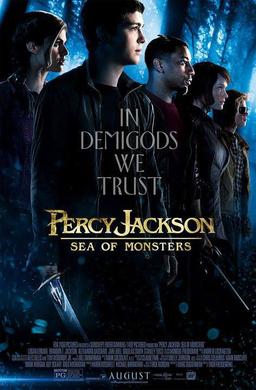
Percy Jackson: Sea of Monsters review
Seas infested with sea reptiles?
Krakens attacking ships?
Sea Serpents on the rampage?
Well not exactly in this film. In this film adaptation of the second book of the Percy Jackson series Percy and his friends at Camp Half-Blood find themselves in a dire situation. The tree which gives Camp Half-Blood its protection has been poisoned and monsters are starting to invade the camp. The only thing that can reverse the poisoning is the legendary Golden Fleece which is located in the Sea of Monsters, which in the series is the ocean where heroes like Jason and Odysseus sailed during their quests. It has moved west like Olympus and the Underworld and is located in the part of the ocean we like to call the Bermuda Triangle. So that's why stuff gets lost in that ocean. They're eaten by monsters. Anyway Clarisse La Rue, daughter of Ares, is given the task of going to retrieve the fleece. Percy and his friends, however, decide to go along. Along the way they encounter many monsters of the myths and learn important lessons of trust, friendship, forgiveness, and of choosing our course in life.
I think this film teaches a good lesson on believing in ourselves. Percy in this film is starting to doubt himself and wondering if he's really good enough. He's starting to attribute his success to luck. However as the film progresses he uses his skills to help his friends survive the dangers of the Sea of Monsters. Annabeth's past comes to life as they encounter Tyson who is the half-brother of Percy. She holds a grudge against Cyclopes because they took the life of a friend of hers years ago. Throughout the film her dislike for Tyson's race is evident. However eventually she learns to not hold Tyson accountable for the actions of others. Probably one of the biggest lessons in the film is that our paths are not set in stone. We can choose our destinies in life.
Admittedly I was furious with the first film. I didn't like how they went a different course from the books. However as I saw this movie I was calmer and I enjoyed it. They did work a little harder to be closer to the book this time than before. There were still plenty of differences from the book. For example they didn't encounter Circe, though she was mentioned. True I wish that the films have stuck closer to the books. However I don't think that I should condemn this movie because of how different from the book it was. If you insist that film adaptations have to be a hundred-percent the same as the book then you might not like this film. However if you want a good adventure to enjoy you might want to set sail on this quest.
Rating: 3.5 out of 5 stars
Tuesday, May 31, 2011
More on Mermaids
Hi again. Sorry for no update last week, but I was a little busy. The reason why I'm revisiting the topic of mermaids is because I don't feel like I covered enough about them last time. Like dragons, there are so many myths and legends surrounding them that I had to do another blog post discussing what the ancient civilizations thought of these ancient creatures. First on the list is Greek culture.

In Greek legends, Triton, son of Poseidon was held to be the father of the mermaids and mermen. Instead of mermaids, however, they were simply known as Tritons and were often seen around the gods of the sea. Their appearance was also described as being more shark-like than what we have today. Some people may think that Poseidon had the basic appearance of a merman, but that is false. That was how his son Triton looked. Another myth of a sea god (though not as well known) is the tale of Glaucus. Glaucus was a fisherman who, after seeing his catch acting strangely, tasted some magic grass and was filled with a love for the sea. Poseidon called together many river gods and they made Glaucus a god of the sea, sealing the deal by giving him the tail of a fish. Therefore, we can conclude that the mermaids and mermen of Greek mythology were basically either gods or servants of the sea gods.
The mermaids of the Norse culture were called selkies, and were basically seals who took human form when they took off their seal skin. Legends vary at how often this would occur. Some say that it could only happen once a year, others say it only happens on Midsummer's eve. These legends say that humans could marry selkies, but very differently. Women had to shed seven tears into the sea to attract the love of a male selkie, while men had to simply capture the skin of a female selkie. This prevented them from returning to the sea and effectively made her his wife. It would appear that selkies were a type of wild person who could become tame if captured.
The Arabs also had their own tales of mermaids. Most of the time they were gods or goddesses of the sea (like Atargatis, who could not conceal her beauty no matter what). However, there were civilizations of merfolk who lived just like people do on the surface (and breeding between the two species did occur, with the result being children with the ability to breathe underwater). One tale from One Thousand and One Arabian Nights tells of how a sailor was brought to a mermaid city, where they lived in a society without money or clothing. Still, for the most part, the Arabs talked about how the societies of mermaids lived, something the rest of the ancient world didn't think of.
The British Isles had many tales of mermaids, most of the time taking a page from the Greek myths of the sirens and making them out to be a bad omen. They thought that if something bad happened, it was the work of a mermaid (whether they were trying to prevent it or not). They were also capable of swimming up rivers and living in freshwater lakes. One nobleman sought to rescue a woman he thought was drowning, but was saved by his servant who saw the maiden as a mermaid. The mermen were often wilder than their female counterparts, but basically had no part in the affairs of humans. Guess they enjoyed what they had under the sea.
Well, that's basically it for the ancient tales of mermaids. There tales of them in China, the Caribbean, and Africa, but unfortunately there wasn't enough to cover in this blog. I think that for the most part we like the modern tales of mermaids as half-fish people who love music and have civilizations under the ocean. I'm pretty sure that has long as we keep telling tales of mystical lands, we will tell tales of the mermaids and mermen.
In Greek legends, Triton, son of Poseidon was held to be the father of the mermaids and mermen. Instead of mermaids, however, they were simply known as Tritons and were often seen around the gods of the sea. Their appearance was also described as being more shark-like than what we have today. Some people may think that Poseidon had the basic appearance of a merman, but that is false. That was how his son Triton looked. Another myth of a sea god (though not as well known) is the tale of Glaucus. Glaucus was a fisherman who, after seeing his catch acting strangely, tasted some magic grass and was filled with a love for the sea. Poseidon called together many river gods and they made Glaucus a god of the sea, sealing the deal by giving him the tail of a fish. Therefore, we can conclude that the mermaids and mermen of Greek mythology were basically either gods or servants of the sea gods.

The mermaids of the Norse culture were called selkies, and were basically seals who took human form when they took off their seal skin. Legends vary at how often this would occur. Some say that it could only happen once a year, others say it only happens on Midsummer's eve. These legends say that humans could marry selkies, but very differently. Women had to shed seven tears into the sea to attract the love of a male selkie, while men had to simply capture the skin of a female selkie. This prevented them from returning to the sea and effectively made her his wife. It would appear that selkies were a type of wild person who could become tame if captured.

The Arabs also had their own tales of mermaids. Most of the time they were gods or goddesses of the sea (like Atargatis, who could not conceal her beauty no matter what). However, there were civilizations of merfolk who lived just like people do on the surface (and breeding between the two species did occur, with the result being children with the ability to breathe underwater). One tale from One Thousand and One Arabian Nights tells of how a sailor was brought to a mermaid city, where they lived in a society without money or clothing. Still, for the most part, the Arabs talked about how the societies of mermaids lived, something the rest of the ancient world didn't think of.
The British Isles had many tales of mermaids, most of the time taking a page from the Greek myths of the sirens and making them out to be a bad omen. They thought that if something bad happened, it was the work of a mermaid (whether they were trying to prevent it or not). They were also capable of swimming up rivers and living in freshwater lakes. One nobleman sought to rescue a woman he thought was drowning, but was saved by his servant who saw the maiden as a mermaid. The mermen were often wilder than their female counterparts, but basically had no part in the affairs of humans. Guess they enjoyed what they had under the sea.
Well, that's basically it for the ancient tales of mermaids. There tales of them in China, the Caribbean, and Africa, but unfortunately there wasn't enough to cover in this blog. I think that for the most part we like the modern tales of mermaids as half-fish people who love music and have civilizations under the ocean. I'm pretty sure that has long as we keep telling tales of mystical lands, we will tell tales of the mermaids and mermen.
Saturday, May 21, 2011
Sailors, Curses, and Mermaids. Oh My!
I meant to do this yesterday with the release of Captain Jack Sparrow's new adventure in Pirates of the Caribbean: On Stranger Tides, but unfortunately that didn't happen. I'll try to do better next week with blogging, but don't worry. I won't stay off for months. Anyway, on with the blog.
Ever since the release of the first film in 2003, Pirates of the Caribbean has captured the imagination of the entire planet. Fans have gone to see the heroics of Will Turner, the courage of Elizabeth Swan, and the cunning of Captain Jack Sparrow. The series newest title, On Stranger Tides, does not feature Will or Elizabeth, but Captain Jack has a great new adventure ahead of him. The pirate now searches for the legendary Fountain of Youth while confronting the woman from his past Angelica, and hot on their trail are the English Navy, zombies, mermaids, and Blackbeard himself.
While Captain Jack Sparrow is one of the smartest (or craziest) men to sail the oceans, he is not the first seafaring hero in the world, and he isn't the first person to encounter creatures like mermaids. Across the world people have had told stories of men who brave the vast oceans and encountered many dangers. I'll discuss some of the heroes in this blog, and what makes them so famous.
Perhaps one of the best known sailors in the realm of fiction is Sinbad the Sailor. First appearing in the collection of stories known as A Thousand and One Arabian Nights, what makes Sinbad so cool is that he didn't go on one, but seven voyages! Some of the adventures he's had involved a roc (a giant bird from Persian mythology that was supposed to carry off and eat elephants) that dropped rocks on his ship after he and his men ate the eggs of the roc. Another of his adventures find him on an island that turns out to be a giant sea animal. Some version say it is a turtle, but some recent adaptations had it as a fish. For some reason, no matter what happens, Sinbad always ends up setting sail again.
Another well-known tale of a seafarer is The Odyssey, which follows the adventures of Odysseus after the Trojan War is won by the Greeks. On his way home Odysseus and his men land on the Island of the Cyclopes, and end up having to blind Polyphemus to escape. Polyphemus calls on his father Poseidon to curse Odysseus, which seems to work considering the trouble that follows. Odysseus and his men encounter Sirens (bird women who lure sailors to their deaths with their voices), the sorceress Circe, and pass through Scylla and Charybdis before offending Apollo by eating some of his cattle. The result is that Odysseus loses his men and he takes twenty years total to get back home to Ithaca.
I think everyone's pretty familiar with what a mermaid is. Mermaids are the mythical sea creatures that are half-fish and half-woman, with the male counterpart being called a merman. Tales of mermaids extend all the way to the time of the Assyrians, over 3000 years ago (give or take). At first the tales of half-fish people were attributed to be the forms of the local mythology's sea god or goddess. Most of the ancient tales of mermaids are diversified, with some of them singing to lure sailors to their deaths to just being an underwater civilization that comes into contact with men. In our day and age the mermaid keeps the look of the original myths (although sometimes they're given seashell bikinis while the original mermaids were completely nude) while being portrayed as music lovers who live in the ocean like we live on the surface. Scientists believe that the stories of mermaids came up when sailors saw manatees swimming about, but that can't be so because tales of these beings have been told by the Arabians, the Greeks, and the Norse alike, long before America was discovered by the rest of the world. Some people even claim to see mermaids to this day. The legends are probably not true, but still it's fun to tell tales of these people and the sailors who encounter them.
Ever since the release of the first film in 2003, Pirates of the Caribbean has captured the imagination of the entire planet. Fans have gone to see the heroics of Will Turner, the courage of Elizabeth Swan, and the cunning of Captain Jack Sparrow. The series newest title, On Stranger Tides, does not feature Will or Elizabeth, but Captain Jack has a great new adventure ahead of him. The pirate now searches for the legendary Fountain of Youth while confronting the woman from his past Angelica, and hot on their trail are the English Navy, zombies, mermaids, and Blackbeard himself.
While Captain Jack Sparrow is one of the smartest (or craziest) men to sail the oceans, he is not the first seafaring hero in the world, and he isn't the first person to encounter creatures like mermaids. Across the world people have had told stories of men who brave the vast oceans and encountered many dangers. I'll discuss some of the heroes in this blog, and what makes them so famous.
Perhaps one of the best known sailors in the realm of fiction is Sinbad the Sailor. First appearing in the collection of stories known as A Thousand and One Arabian Nights, what makes Sinbad so cool is that he didn't go on one, but seven voyages! Some of the adventures he's had involved a roc (a giant bird from Persian mythology that was supposed to carry off and eat elephants) that dropped rocks on his ship after he and his men ate the eggs of the roc. Another of his adventures find him on an island that turns out to be a giant sea animal. Some version say it is a turtle, but some recent adaptations had it as a fish. For some reason, no matter what happens, Sinbad always ends up setting sail again.
Another well-known tale of a seafarer is The Odyssey, which follows the adventures of Odysseus after the Trojan War is won by the Greeks. On his way home Odysseus and his men land on the Island of the Cyclopes, and end up having to blind Polyphemus to escape. Polyphemus calls on his father Poseidon to curse Odysseus, which seems to work considering the trouble that follows. Odysseus and his men encounter Sirens (bird women who lure sailors to their deaths with their voices), the sorceress Circe, and pass through Scylla and Charybdis before offending Apollo by eating some of his cattle. The result is that Odysseus loses his men and he takes twenty years total to get back home to Ithaca.
I think everyone's pretty familiar with what a mermaid is. Mermaids are the mythical sea creatures that are half-fish and half-woman, with the male counterpart being called a merman. Tales of mermaids extend all the way to the time of the Assyrians, over 3000 years ago (give or take). At first the tales of half-fish people were attributed to be the forms of the local mythology's sea god or goddess. Most of the ancient tales of mermaids are diversified, with some of them singing to lure sailors to their deaths to just being an underwater civilization that comes into contact with men. In our day and age the mermaid keeps the look of the original myths (although sometimes they're given seashell bikinis while the original mermaids were completely nude) while being portrayed as music lovers who live in the ocean like we live on the surface. Scientists believe that the stories of mermaids came up when sailors saw manatees swimming about, but that can't be so because tales of these beings have been told by the Arabians, the Greeks, and the Norse alike, long before America was discovered by the rest of the world. Some people even claim to see mermaids to this day. The legends are probably not true, but still it's fun to tell tales of these people and the sailors who encounter them.
Subscribe to:
Posts (Atom)